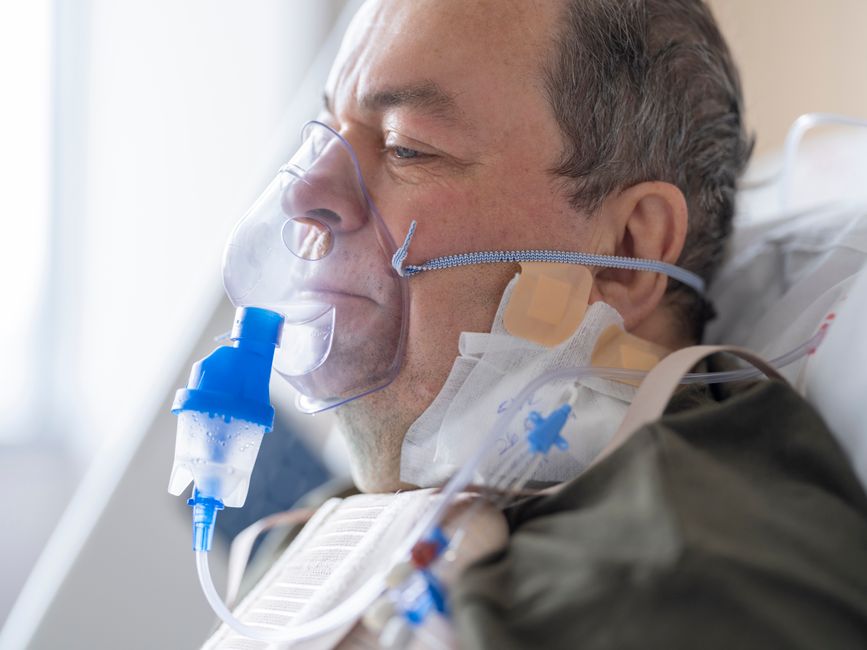
COPD is a serious lung disease, and you may qualify for Social Security disability if it stops you from working. Chronic obstructive pulmonary disease (COPD) includes emphysema and chronic bronchitis. It makes breathing hard, even at rest. If you are short of breath doing simple tasks, you are not alone. The Social Security Administration (SSA) does approve many breathing claims. However, approval depends on real medical proof. This guide explains, in plain terms, how the SSA decides.
Copd? The Honest Short Answer
It depends on how severe your breathing is. The SSA does not approve people just because they have COPD. Instead, it looks at test numbers and how much you can still do.
For example, a spirometry test measures how much air you push out. If that number is low enough for your height, you may meet the listing. If your numbers are close but not quite there, you still have a path.
In most cases, the SSA also checks what work you can handle. This is called your residual functional capacity (RFC). A weak RFC can win the claim even without perfect test scores.
The SSA Blue Book Criteria for This Condition
The SSA evaluates COPD under Listing 3.02, “Chronic respiratory disorders.” You can read the rules at ssa.gov/disability/professionals/bluebook. The main path uses your FEV1 score. FEV1 means forced expiratory volume in one second.
The required FEV1 number depends on your height without shoes. Shorter people need a lower number; taller people need a higher one. The SSA uses your best test result after you use an inhaler. Typically, you need two valid spirometry readings on file.
There are other ways to qualify, too. Listing 3.02 also covers low gas exchange, shown by a test called DLCO. Low blood oxygen (arterial blood gas) can also count. For example, the SSA may approve based on these even if your FEV1 is borderline.
If your numbers do not meet the exact listing, the SSA checks “medical equivalence.” That means your COPD limits you as much as a listed case. As a result, your daily limits and RFC become very important.
How to Win a Disability Claim With COPD
Winning starts with regular medical care. See your lung doctor (pulmonologist) often. The SSA trusts a long, steady record more than a single visit. Make sure your spirometry tests are recent and complete.
Push for the right tests. Ask your doctor about spirometry, DLCO, and blood oxygen testing. For example, your oxygen may drop when you walk. A six-minute walk test can show this clearly.
Document your limits honestly. Many claimants win on RFC, not just test scores. If you cannot lift, walk far, or breathe around dust and fumes, say so. Heat, cold, and humidity often make COPD worse, and that matters.
Report every flare-up and hospital visit. Frequent infections and oxygen use strengthen your case. Typically, the more your records match your daily struggle, the stronger your claim becomes.
Sample Doctor / RFC Support Letter
A short letter from your treating doctor can carry real weight. It should be specific, honest, and tied to your test results. Below is a sample your doctor could adapt to your own care.
“To the Social Security Administration: I have treated [Patient Name] since [date] for severe COPD with emphysema. Spirometry on [date] showed a post-bronchodilator FEV1 of [value], which is markedly reduced for the patient’s height. The patient also has chronic low oxygen and frequent flare-ups.
📨 Get Free Disability Guides Alerts
Free · No spam · Unsubscribe anytime
In my medical opinion, this patient cannot sustain full-time work. They become short of breath after walking less than one block. They cannot lift more than 10 pounds without distress. They must avoid dust, smoke, fumes, and temperature extremes. They need unscheduled rest breaks and would likely miss several workdays each month. These limits are permanent and consistent with the clinical findings. Sincerely, [Doctor Name, Credentials].”
Symptom & Limitation Worksheet
Bring a written list to your next appointment. It helps your doctor record what the SSA needs to see. Be specific and use real examples from your week.
- How far can you walk before stopping to breathe? (steps, feet, or blocks)
- Do you use oxygen? How many hours per day?
- How many stairs can you climb without resting?
- How much can you lift or carry before getting winded?
- What triggers your symptoms? (dust, smoke, cold air, heat, humidity)
- How often do you have flare-ups or chest infections each year?
- How many hospital or ER visits in the last 12 months?
- Which daily tasks now exhaust you? (dressing, cooking, showering)
- How many days each month do you feel too sick to do much at all?
If You Are Denied
A denial is not the end. Many strong claims are denied at first, then won on appeal. The SSA’s own numbers show appeals matter, especially at the hearing stage. So do not give up if your first answer is no.
You have the right to appeal. Representation often helps, and many representatives only get paid if you win. You can also gather more recent tests and a fresh doctor’s letter before your hearing.
Frequently Asked Questions
Does COPD automatically qualify for disability?
No. Having COPD is not enough by itself. The SSA looks at your breathing test numbers and how much you can still do. Severe, well-documented cases have the best chance.
What FEV1 number do I need to qualify?
It depends on your height without shoes. The SSA uses a table in Listing 3.02. Ask your doctor for your exact FEV1 result, then compare it to the current chart on ssa.gov.
Can I work part-time while I apply?
Maybe, but be careful. The SSA limits how much you can earn, called substantial gainful activity (SGA). This dollar limit changes every January. Confirm the current 2026 figure at ssa.gov/oact/cola/sga.html before you work.
Is COPD on the Compassionate Allowances list?
COPD itself is generally not on that fast-track list. However, some severe lung conditions are. You can check the current list at ssa.gov/compassionateallowances to be sure.
How much will my disability check be?
Your amount depends on your work history and the type of benefit. Payment levels change each January. You can see your own estimate by signing in to your account at ssa.gov/myaccount.
See your state’s approval odds
Approval odds and wait times vary by where you live, even though the rules are the same everywhere. See your state’s numbers and the guides that fit your situation.
Sources & How to Verify
The information on this page comes from official government sources. Social Security Disability rules, benefit amounts, and the SGA limit change — usually every January — so always confirm the current figure and any deadline with the Social Security Administration before you act. We are an independent educational resource, not the SSA, and this page is not legal, medical, or financial advice.
- Social Security Administration: ssa.gov — the official source for eligibility, benefit amounts, and appeals
- SSA Blue Book (Listing of Impairments): ssa.gov/disability — the medical criteria the SSA uses to decide claims
- SSA disability data & appeals: ssa.gov/appeals — the appeal steps and disposition statistics
- U.S. Department of Labor: dol.gov — related federal program background
- National Council on Aging: ncoa.org — neutral benefits guidance
Content last reviewed June 2026. If you notice an outdated figure, please contact us.
Related Guides
- Conditions That Qualify for Disability
- How to Apply for Disability
- Denials & Appeals
- More in This Category
- Approval Odds by State
- Disability Glossary
Informational only — not legal, medical, or financial advice. Disability Claim Info is an independent educational resource, not the Social Security Administration, a law firm, or a medical or financial advisor, and this page does not provide legal, medical, or financial advice. Social Security Disability rules, benefit amounts, and deadlines change over time, and any estimate is illustrative only. Always confirm your eligibility, the current figure, and any deadline with the Social Security Administration and a licensed attorney or accredited representative before you act.